Shostakovich / Mendelssohn, Conducted by D. Ceretta
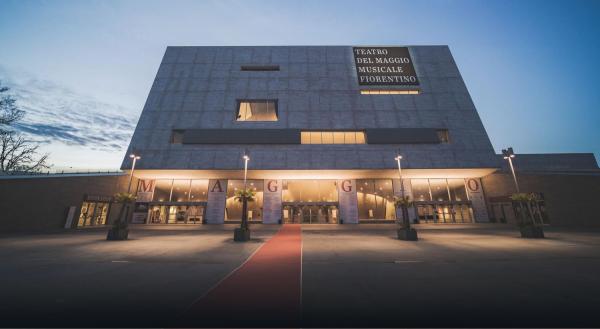
In a concert devoted to the writing of William Shakespeare, the talented young Italian conductor Diego Ceretta leads the esteemed Orchestra della Toscana and the Maggio Musicale Fiorentino Female Choir at Florence's premier music venue, the Teatro del Maggio Musicale Fiorentino. The programme, dedicated to Shakespeare, consists of two works inspired by two of the Bard’s plays: Dmitri Shostakovich's Hamlet, Op. 32, Incidental Music to Shakespeare's Tragedy, followed by Felix Mendelssohn's A Midsummer Night's Dream, Incidental Music, Op. 61.
The concert, dedicated to Shakespeare, opens with music that Shostakovich composed in 1931 and 1932. Written for a dark and satirical theatrical production directed by Nikolai Akimov at Moscow's Vakhtangov Theatre, the score reflects Akimov's somewhat absurd approach to the famous Shakespearean tragedy, Hamlet. This production reversed many of the conventions of the original, with some characters showing traits that are typically associated with others and a completely reimagined version of the story's plot. As such, Shostakovich produced what can best be described as eclectic incidental music for the play, incorporating cabaret and musical parodies. Shostakovich later adapted this work into an orchestral suite, Op. 32a, but the full incidental music includes music for singers, too, with vocalists sometimes singing and sometimes speaking lines from the play. This concert features the latter, including sung and spoken passages from Shakespeare’s text. Hamlet, Op. 32 was first performed at the premiere of Akimov's play on 19 May 1932.
The programme continues with Mendelssohn’s incidental music for Shakespeare's A Midsummer Night's Dream. The great German composer had orchestrated an overture for the play in 1826, Op. 21. Following a commission by the king of Prussia, Frederick William IV, for a new production of Shakespeare's tale, he returned to the original work in 1842, adding further music for notable scenes in the play, such as the famous Wedding March. When Mendelssohn had completed the expanded work, it consisted of 14 numbers, including the aforementioned overture and the finale. The resulting incidental music, Op. 61, was first performed at the premiere of a stage production at the king’s New Palace in Potsdam on 14 October 1843. The work includes several vocal numbers, notably Ye Spotted Snakes, which opens the second scene in Act II.
Diego Ceretta has served as the Chief Conductor of the Orchestra della Toscana since 2023. A graduate of the Milan Conservatory, he is no stranger to the Teatro del Maggio Musicale Fiorentino, having previously conducted its orchestra during the venue's 85th anniversary festival. With a programme dedicated to music composed to accompany Shakespearean works and an acclaimed conductor, this concert offers a fascinating insight into the way the Bard has continued to inspire other creative minds long since his works were first produced for the stage.