Ivor Bolton conducts Schubert
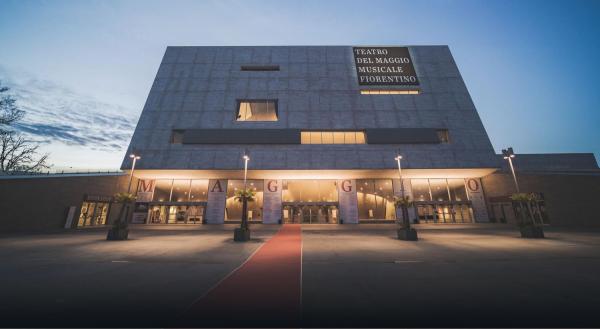
This season, the esteemed English conductor Ivor Bolton takes charge of a concert featuring the wonderful music of Franz Schubert, the prolific Austrian composer whose work spans the late classical and early Romantic eras. Bolton conducts the Maggio Musicale Fiorentino Orchestra and Choir, both stalwarts of the Florentine cultural scene, at a concert of contrasting music at the city's most famous venue, the Teatro del Maggio Musicale Fiorentino.
Completed when he was just 16 years of age, Schubert's Symphony No. 1 in D major, D. 82 opens the programme. Although it was probably first performed by the orchestra of the Vienna Stadtkonvikt, the school Schubert attended in his youth, its first documented performance took place on 5 February 1881 at Crystal Palace in London, over half a century after Schubert had died. Essentially, the work is one that reflects the dominant Viennese classical style of Schubert's youth but which also showcases the distinctive lyrical approach his later work would develop. The symphony opens with a solemn section before the mood turns into something altogether sunnier at the start of the second movement. Later, the symphony shows influences that have been drawn from traditional Austrian folk-dance melodies. The fourth and final movement has a simmering energy that builds as the orchestration moves towards the symphony's emphatic finale.
The programme continues with a sacred work by Schubert composed, according to dates he noted on the score, in 1828, when the maestro was 31. Schubert's Mass No. 6 in E flat major, D. 950, for soloists, chorus and orchestra is a very different piece which conveys the composer's profound sense of spirituality alongside moments of dramatic intensity and emotional tenderness. His final setting of the Mass, Schubert structured it in six movements, opening with a Kyrie. The chromatic fugues and modulations within this Mass demonstrate Schubert's growing maturity, hinting at the harmonic language of the more mature Romantic style that he and other composers of his age would develop as they continued to move away from the rules of 18th-century polyphony. In the Sixth Mass, Schubert omitted certain passages from the texts of the Gloria and the Credo, while other sections feature repeated lines from the text to be sung by the choir. Overall, the effect is one of considerable emotional depth, combining moments of solemn reflection with passages of grandeur and powerful choral expression.
Ivor Bolton is widely regarded as among distinguished conductors of his time who specialises on the Baroque and Classical musical repertoires. He has served as the Chief Conductor of the Basel Sinfonieorchester and as the Artistic Director of the Teatro Real in Madrid. Elsewhere, in the course of his illustrious career, he has been a frequent guest conductor at the Teatro del Maggio Musicale Fiorentino in Florence. Under Bolton's baton, these two contrasting works by Schubert offer audiences a glimpse into the musical development the composer went through in his life.